




How to Choose a Commercial Meat Aging & Holding Cabinet: A Complete Guide for Beef
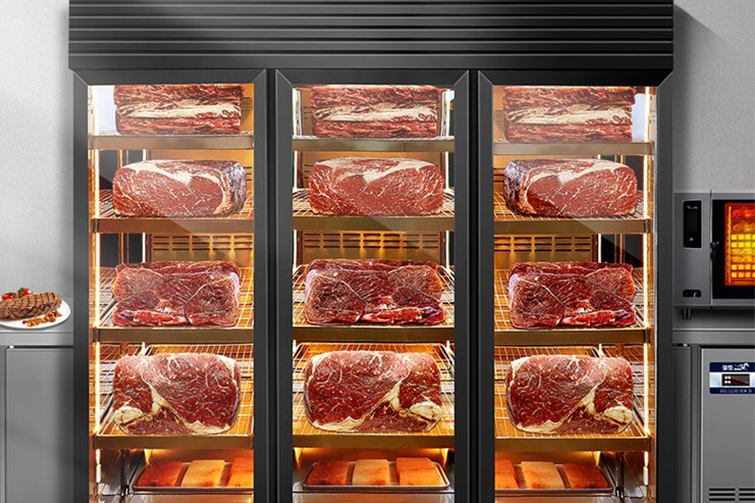
A commercial meat aging cabinet, often referred to as a beef aging cabinet, steak cabinet, or dry-aging cabinet, is a specialized piece of equipment that transforms good cuts of beef into exceptional, high-value products. Unlike a standard refrigerator, it provides the precise temperature, humidity, and airflow control required for enzymatic and biochemical processes that enhance flavor, tenderness, and aroma. Selecting the right unit is a critical investment. This guide will help you navigate the key considerations.
1. Determine Your Primary Purpose and Volume
First, clarify your operational goals:
- Dry Aging vs. Wet Aging vs. Fresh Holding:Dry Aging: Requires the most precise control. You need a cabinet capable of maintaining very specific conditions for extended periods (14+ days, often 28-45 days) to develop concentrated flavor and tenderize meat through moisture evaporation and enzymatic action.Wet Aging: Meat is vacuum-sealed and aged in its own juices. While it can be done in a high-quality holding cabinet, the requirements for humidity and airflow are less critical than for dry aging.Fresh Meat Holding: For short-term storage and display of premium cuts, focusing on optimal presentation and preventing surface drying.
- Production Scale: Estimate the total weight and volume of meat you plan to age at one time. Cabinets are sized by internal capacity (cubic feet/liters) and shelf loading capacity (lbs/kg). Consider both your current needs and potential for growth.
2. Understand the Critical Technical Specifications for Aging
These parameters are non-negotiable for successful aging, especially dry aging:
- Precise Temperature Control:Range: A wide range is ideal, but the critical zone for dry aging is typically -1°C to +4°C (30°F to 39°F). Look for stability within ±0.5°C (±1°F). Fluctuations can ruin the process.Display: A high-accuracy digital display and controller are essential.
- Precise Humidity Control (The Key to Dry Aging):Range & Stability: For dry aging, humidity must be adjustable and stable, typically between 75% and 85% Relative Humidity (RH). Too low causes excessive hardening and weight loss; too high promotes spoilage.Active System: The cabinet must have an active humidification system (often ultrasonic or evaporative) and a dehumidification function (usually via the refrigeration cycle) to maintain the exact setpoint.
- Optimized Airflow & Filtration:Direction & Speed: A gentle, vertical laminar airflow is preferred. It must be uniform throughout the cabinet to ensure consistent conditions around every cut. High-speed or turbulent air causes uneven drying ("case hardening").Air Purification: An integrated activated carbon and/or UV-C light air filtration system is crucial. It absorbs odors, prevents cross-contamination of flavors between different meats, and inhibits surface microbial growth (including unwanted mold/bacteria), promoting the growth of beneficial molds.
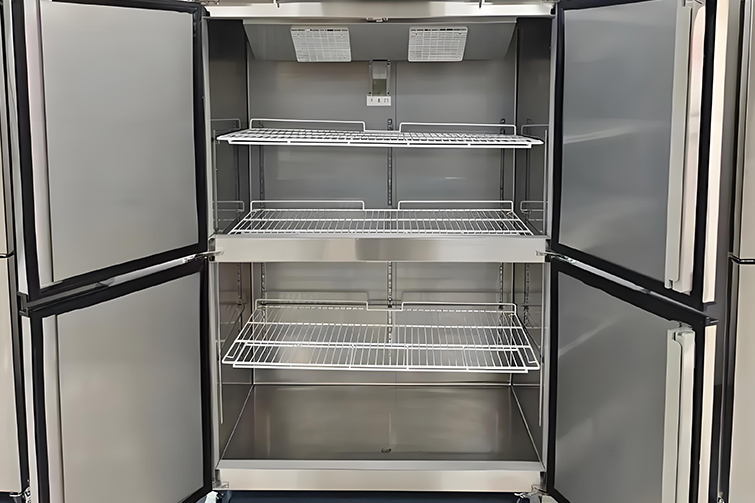
- Hygienic Construction & Materials:Interior: 100% High-Grade Stainless Steel (SUS 304 or 316) is mandatory. It must be non-corrosive, seamless, and easy to sanitize. Some interiors have a special antimicrobial coating.Shelving: Shelves must be sturdy, stainless steel wire racks that allow for optimal air circulation on all sides of the meat. Adjustability is important.Door: A double or triple-pane glass door with a heated edge is standard. This prevents condensation and fogging, providing a perfect view while maintaining internal humidity. The seal must be absolutely airtight.
3. Evaluate Usability and Smart Features
- Control System: Modern units offer touchscreen controllers with pre-set programs for different aging styles (dry age, wet age, hold) and meat types. The ability to create and save custom programs is a major advantage.
- Data Logging & HACCP Compliance: For food safety and process control, choose a unit with integrated data logging that records temperature and humidity over time. This documentation is vital for quality assurance and health inspections.
- Defrost System: An automatic, drip-free defrost system prevents ice buildup on the evaporator coil, which would disrupt internal humidity and temperature.
4. Consider the Type of Aging Cabinet
- Standard Dry-Aging Cabinets: The workhorses for dedicated dry-aging programs. Focus on the specs listed above.
- Dual-Zone Cabinets: Feature two independently controlled compartments. Ideal for operations aging different products (e.g., beef and game) to different specifications simultaneously, or for holding fresh meat in one zone while aging in another.
- Hybrid Aging/Holding Cabinets: Offer a wider temperature and humidity range, suitable for both aging and general meat holding/presentation. Versatile but may not match the precision of a dedicated dry-ager for long-term projects.
5. Assess Total Cost of Ownership and Support
- Initial Investment: High-precision cabinets are a significant investment. Price correlates strongly with control accuracy, build quality, and features.
- Operational Costs: Consider energy efficiency (look for well-insulated cabinets with efficient compressors) and cost of replacement filters for the air purification system.
- Warranty & Service: This is complex equipment. A comprehensive warranty (3+ years on the compressor, 1-2 years on parts and labor) is essential. Ensure the manufacturer or supplier offers reliable local technical support.
Final Selection Checklist:
- Purpose Defined: I know if I need dedicated dry-aging, multi-purpose aging, or high-end holding.
- Capacity: The internal volume and shelf weight capacity meet my production goals.
- Temperature Control: Precision of at least ±0.5°C (±1°F) with a digital controller.
- Humidity Control: Active humidification AND dehumidification system with a suitable range.
- Air Filtration: Integrated activated carbon and/or UV-C light purification system.
- Hygiene: Full stainless steel interior, seamless construction, easy to clean.
- Airflow: Promotes gentle, uniform circulation without direct blasts on the meat.
- Smart Features: HACCP data logging, programmable settings, and a user-friendly interface.
- Warranty & Support: Strong warranty and confirmed local service availability.
Choosing the right commercial beef cabinet is about prioritizing precision, hygiene, and control. By focusing on the stability of the core environment (temperature, humidity, purified airflow) and investing in robust construction, you secure not just a storage unit, but a profit center capable of producing unparalleled, premium meat products that define your brand's quality.