




How to Choose the Right Commercial Thawing Cabinet: A Complete Buyer's Guide
A commercial thawing cabinet is an indispensable piece of equipment in any professional kitchen, bakery, or catering facility. It moves food from frozen to kitchen-ready quickly, safely, and consistently, preserving quality far better than risky room-temperature or time-consuming refrigerator thawing. Choosing the right one, however, requires careful consideration. This guide will walk you through the key factors to ensure you invest in the perfect unit for your operation.
1. Assess Your Operational Needs
Before looking at specifications, define your requirements:
- Volume & Capacity: Determine your daily thawing volume (in kg/lbs). Thawing cabinets are rated by internal capacity (in liters/cubic feet) and often by standard pan capacity (e.g., holds 12 full-size gastronorm pans). Choose a size that matches your peak demand without excessive oversizing.
- Product Type: What will you primarily thaw? Large, dense items (like whole turkeys or blocks of meat) require robust airflow and precise temperature control. Delicate seafood or pre-portioned items need gentle, even heating to prevent surface cooking.
- Speed vs. Quality: Standard cabinets offer a controlled 1-3°C (34-38°F) thaw, ideal for overnight planning. Rapid-thaw cabinets use precise temperature and humidity control to thaw in hours, perfect for high-turnover kitchens. Decide which workflow suits you best.
2. Understand the Critical Technical Specifications
These are the core features that determine performance:
- Temperature Range & Control: A wide, precise range (e.g., 0°C to +15°C / 32°F to 59°F) is essential. Look for a digital thermostat with ±1°C accuracy. For versatile operations, some units offer separate "holding" and "fermentation" modes.
- Humidity Control (The Key to Quality): This is the most important feature for preventing moisture loss. Opt for a unit with active humidity control (often via a built-in steam generator or ultrasonic humidifier). Look for adjustable humidity levels (typically 50-90% RH). High humidity keeps surfaces moist, preventing dehydration and discoloration ("freezer burn" effect).
- Airflow System: A powerful, forced-air circulation system with strategically placed vents ensures uniform temperature and humidity throughout the cabinet, eliminating cold spots. For delicate items, a "gentle air" mode is a valuable addition.
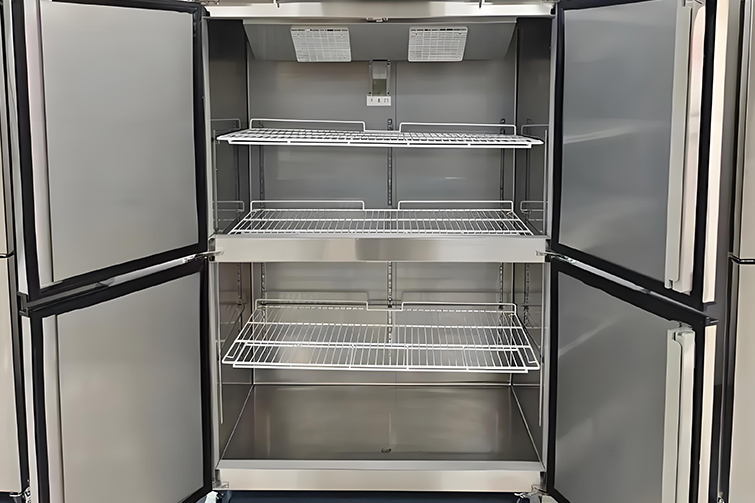
- Construction & Hygiene:Interior: Full stainless steel (SUS 304) is mandatory for durability and easy cleaning. Seamless, rounded corners prevent bacterial buildup.Insulation: High-density, CFC-free polyurethane foam ensures energy efficiency and stable internal temperatures.Door: A double-paned, heated glass door prevents condensation, providing a clear view without "fogging." A robust gasket ensures a tight seal.
- Shelving: Adjustable, heavy-duty stainless steel wire shelves or full-size gastronorm pan slides provide flexibility. Ensure the weight rating meets your needs.
- Defrost System: An automatic drip-free defrost system for the evaporator coil is crucial for maintenance-free operation and consistent performance.
3. Compare the Different Types
- Standard Thawing Cabinets: Maintain a consistent, low temperature with high humidity. Best for planned, overnight thawing with optimal quality retention.
- Rapid Thaw Cabinets: Use precisely controlled warmer air and high humidity to drastically reduce thawing time (e.g., thawing a 10kg turkey in ~4 hours). Ideal for à la carte or high-volume kitchens.
- Combination Cabinets: Offer multiple functions (Thaw / Proof / Ferment / Hold) in one unit, providing excellent versatility for bakeries or diverse kitchens.
4. Prioritize Safety, Compliance & Ease of Use
- Food Safety Certifications: Ensure the cabinet complies with local food safety regulations. Features like HACCP-compliant data logging (which records temperature/humidity over time) are invaluable for audits.
- User Interface: An intuitive digital control panel with a clear display is essential. Pre-set programs for different food types (meat, fish, pastry) can simplify operation.
- Cleaning & Maintenance: Check for easy access to drains, filters, and internal components. Self-diagnostic error codes can simplify troubleshooting.
5. Consider the Total Cost of Ownership
- Initial Investment: Get quotes for units that meet your technical needs.
- Running Costs: Consider energy efficiency (look for well-insulated units with efficient compressors). Water usage for humidity generation is also a factor.
- Reliability & Warranty: Choose a reputable manufacturer known for professional kitchen equipment. A comprehensive warranty (e.g., 2-3 years on parts, 1 year on labor) and the availability of local technical support are critical.
Final Checklist Before Purchase:
- Capacity matches my peak volume.
- Unit features active humidity control.
- Interior is full stainless steel with excellent hygiene design.
- Temperature control is precise (±1°C) and digital.
- Airflow is forced and uniform.
- Defrost system is automatic.
- Interface is user-friendly with useful presets (if needed).
- It complies with necessary safety standards.
- Warranty and service support are confirmed.
By methodically working through these steps—focusing first on your needs, then on core performance specs (especially humidity control), and finally on hygiene and support—you will select a commercial thawing cabinet that becomes a reliable, quality-enhancing workhorse in your kitchen for years to come.